Understanding anxious, avoidant, and secure attachment patterns in relationships
Have you ever found yourself trying to figure out why someone behaves the way they do in a relationship?
Maybe they're incredibly affectionate one day but emotionally distant the next. Maybe they need constant reassurance that everything is okay. Or perhaps they seem comfortable with closeness, communicate openly, and don't leave you questioning where you stand.
These patterns can sometimes offer clues about someone's attachment style.
But here's something important to understand: Recognizing attachment styles isn't about analyzing every text message, disagreement, or moment of distance. It's about understanding patterns that develop over time.
Attachment theory offers a framework for understanding how people experience emotional closeness, navigate uncertainty, and respond to vulnerability in relationships.
And when we begin recognizing these patterns, we can develop a deeper understanding of both our partners and ourselves.
First, What Are the Different Attachment Styles?
Attachment styles describe patterns in how we experience and respond to emotional connection.
Although attachment is complex and can vary across relationships, three commonly discussed patterns are:
Anxious Attachment
People with anxious attachment tendencies often deeply value emotional closeness but may experience heightened sensitivity to perceived rejection or abandonment.
They might:
Seek frequent reassurance about the relationship.
Become distressed when communication changes.
Overthink interactions or interpret distance as rejection.
Feel uncomfortable with uncertainty about their partner's feelings.
Struggle to feel secure even when the relationship is going well.
Underneath these behaviors is often a desire to feel safe, connected, and emotionally secure.
Avoidant Attachment
People with avoidant attachment tendencies may value independence and experience discomfort when relationships require greater emotional vulnerability.
They might:
Pull away when emotional intimacy increases.
Have difficulty expressing vulnerable feelings.
Minimize emotional needs, including their own.
Become uncomfortable during emotionally intense conversations.
Prefer handling problems independently rather than seeking support.
It's important to recognize that valuing independence doesn't automatically indicate avoidant attachment.
The broader pattern matters.
Secure Attachment
People with more secure attachment patterns generally feel comfortable with both emotional closeness and independence.
They tend to:
Communicate their needs and feelings more openly.
Respond to relationship concerns with curiosity and understanding.
Maintain a sense of individuality while building connection.
Navigate conflict without consistently withdrawing or escalating.
Demonstrate reliability and emotional consistency.
Secure attachment doesn't mean someone never feels insecure or struggles with communication.
It means they generally have the capacity to navigate those experiences while maintaining connection.
There is also a fourth commonly discussed pattern, often called fearful-avoidant or disorganized attachment, which can involve conflicting desires for closeness and protection from vulnerability.

1. Notice How They Approach Emotional Closeness
One of the most revealing aspects of attachment is how someone responds to intimacy.
And I'm not simply talking about physical affection.
Emotional intimacy involves vulnerability, openness, and allowing another person to truly know you.
Someone with secure attachment tendencies may welcome emotional closeness while also maintaining healthy independence.
Someone with anxious attachment tendencies may strongly desire closeness but struggle with fears that the connection could disappear.
Someone with avoidant attachment tendencies may enjoy a relationship but begin feeling uncomfortable when emotional expectations increase.
The important question isn't simply whether someone wants closeness. It's how they respond when closeness requires vulnerability.
For example, someone might enjoy spending time together but consistently avoid conversations about feelings, needs, or the future.
Rather than immediately assigning an attachment label, consider whether this reflects an ongoing pattern and how it affects the relationship.
2. Pay Attention to How They Respond to Uncertainty
Every relationship experiences uncertainty.
Schedules change. Text messages go unanswered. Someone has a difficult day and becomes quieter than usual.
These moments are normal.
However, the way someone interprets and responds to uncertainty may reveal important attachment tendencies.
For someone with anxious attachment, uncertainty can activate fears of rejection or abandonment.
A delayed response might trigger thoughts such as:
Did I do something wrong?
Are they losing interest?
Is something happening that I don't know about?
This can lead to reassurance seeking, overthinking, or attempts to restore closeness quickly.
Someone with avoidant tendencies may respond to relationship stress by creating distance, focusing on independence, or avoiding emotionally demanding conversations.
Someone with more secure tendencies may recognize uncertainty without immediately interpreting it as a threat.
They might communicate directly, ask questions, or allow space without assuming the relationship is in danger.

What matters isn't whether someone experiences insecurity.
It's how they manage that insecurity and whether they can communicate about it.
3. Look for Patterns, Not Isolated Behaviors
This may be one of the most important things to understand about attachment styles.
One behavior does not define someone's attachment style.
A person who needs reassurance isn't automatically anxiously attached.
A person who wants alone time isn't automatically avoidantly attached.
And someone who communicates well during one disagreement isn't necessarily securely attached.
Human behavior is influenced by many factors, including stress, previous experiences, emotional capacity, personality, and the circumstances of a particular relationship.
Instead of focusing on individual incidents, ask yourself:
Does this behavior happen consistently?
Does it appear primarily during emotional vulnerability or conflict?
How does this person respond when concerns are discussed?
Are they willing to recognize and work on relationship difficulties?
Does the overall relationship feel reciprocal and emotionally supportive?
Attachment patterns become more meaningful when viewed within the larger context of the relationship.
The goal is understanding, not labeling.
4. Notice What Happens When You Express Your Emotional Needs
One of the most meaningful ways to understand relationship dynamics is to observe what happens when you communicate your feelings.
Imagine telling your partner:
I've noticed we've had less time together lately, and I've been feeling disconnected. I'd really like us to make more time for each other.
How do they respond?
A securely attached response might involve listening, asking questions, and discussing ways to reconnect.
Someone with anxious tendencies might welcome the opportunity for closeness but also become worried that the conversation means something is wrong.
Someone with avoidant tendencies might initially feel overwhelmed, defensive, or unsure how to respond to the emotional request.
These are possibilities, not guarantees. People with any attachment style can learn effective communication skills, and anyone can respond poorly when stressed.
What matters is whether both partners are willing to engage.
Can they hear your feelings without consistently dismissing them?
Can they acknowledge your needs even when those needs differ from their own?
Can you work toward understanding rather than becoming trapped in the same cycle?

A healthy relationship doesn't require perfect communication.
It requires a willingness to communicate, listen, and repair.
5. Pay Attention to What Happens After the Conversation
Words matter.
But what happens after a conversation can be just as meaningful.
Imagine explaining to your partner that last-minute plans leave you feeling disconnected.
They listen and agree to communicate earlier.
But the same pattern continues repeatedly, without acknowledgment or effort to change.
The issue may no longer be simply whether they understand your feelings.
It may involve their willingness or ability to respond to those feelings through action.
When considering relationship patterns, notice whether someone:
Follows through on agreements.
Makes reasonable efforts to meet shared needs.
Acknowledges when their behavior has been hurtful.
Takes responsibility for their part in conflict.
Demonstrates consistency between words and actions.
Of course, no one gets this right all the time.
The goal isn't perfection.
It's recognizing whether there is an ongoing pattern of emotional responsiveness and mutual effort.
Understanding Their Attachment Style Shouldn't Mean Ignoring Your Own Needs
This is where attachment education becomes especially important.
Sometimes, when we begin learning about attachment styles, we become so focused on understanding another person's behavior that we overlook our own emotional experience.
We tell ourselves:
They're only pulling away because they're avoidantly attached.
They can't help needing reassurance because they're anxiously attached.
If I just understand their attachment wounds, maybe the relationship will feel different.
Understanding someone's attachment history can help us approach relationships with greater empathy.
But understanding a behavior doesn't automatically make that behavior healthy or sustainable.

You can have compassion for someone's attachment struggles while still recognizing your own emotional needs and boundaries.
Attachment styles are not excuses for dismissiveness, chronic inconsistency, manipulation, or emotional harm.
And they aren't fixed identities that determine whether someone can build a healthy relationship.
People can develop greater attachment security through self-awareness, supportive relationships, and intentional emotional work.
The Most Important Question to Ask Yourself
When you're trying to understand someone's attachment style, it's easy to become consumed with figuring them out.
But I encourage you to consider another question:
»How do I experience myself within this relationship?«
Do you feel comfortable expressing your needs?
Can you maintain your individuality?
Are you able to communicate concerns without constantly fearing the relationship will end?
Does the relationship create opportunities for emotional safety, connection, and growth?
Understanding attachment patterns can offer valuable insight.
But the ultimate goal isn't becoming an expert at identifying someone else's attachment style.
It's developing the awareness to recognize healthy relationship patterns, communicate your needs, and build connections that support emotional security.
Want to Better Understand Your Own Attachment Patterns?
If you recognize yourself in some of the anxious attachment experiences described here, you're not alone.
Anxious attachment can make relationships feel emotionally exhausting, especially when uncertainty activates fears of rejection, abandonment, or not being enough.
But these patterns can change.
The Anxious Attachment Reset, created through Emotionally Explained, is a guided workbook designed to help you explore your attachment triggers, recognize emotional patterns, strengthen self-awareness, and begin responding to relationship anxiety with greater intention.
Because developing secure attachment isn't about learning how to never need reassurance.
It's about building the internal awareness and emotional tools that allow you to experience connection without constantly losing yourself in the process.
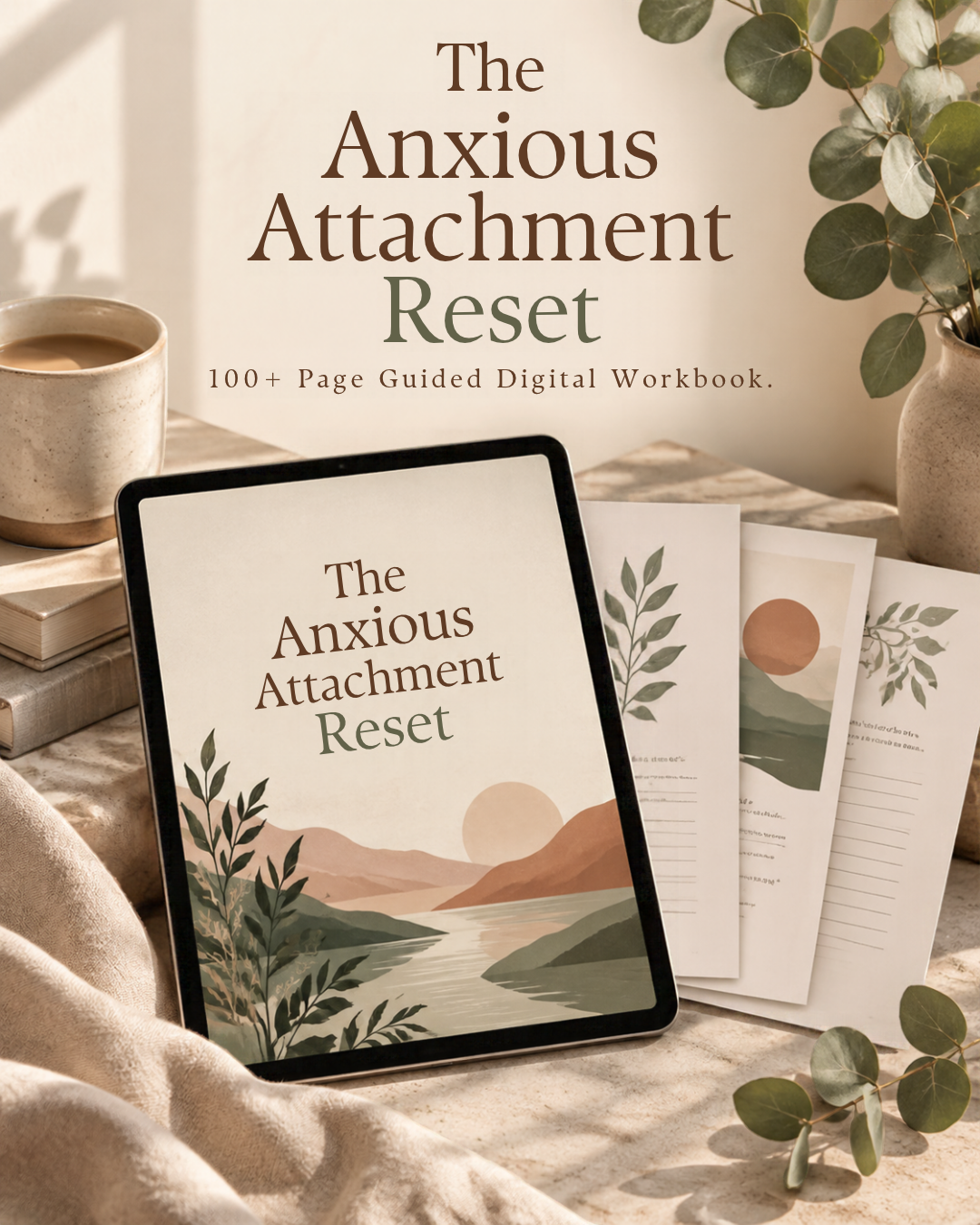
The Anxious Attachment Reset is out NOW!
Explore The Anxious Attachment Reset and begin building a more secure relationship with yourself and others.
Educational disclaimer: This article is intended for general education and self-reflection. Attachment styles are not clinical diagnoses, and individual behaviors should not be used to diagnose or definitively categorize another person.
